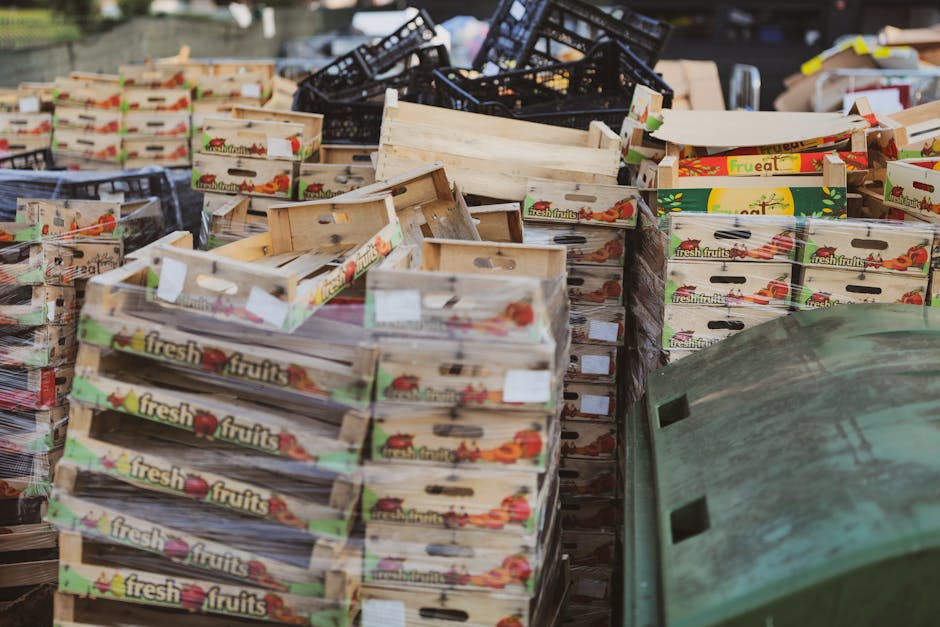
Archway Market Rubbish Clearance Guide for Stalls
If you run a stall at Archway market, you already know the messy bit is never far behind the selling bit. Cardboard starts piling up, polystyrene gets underfoot, and by the end of a busy morning the bin bag situation can look frankly ridiculous. This Archway market rubbish clearance guide for stalls is here to make that part easier: what to clear, how to organise it, what to avoid, and how to keep your pitch tidy without slowing service.
Whether you trade food, clothing, plants, gifts, or mixed goods, rubbish clearance is not just a tidy-up job. It affects safety, customer experience, stall presentation, waste costs, and how smoothly you can pack down at the end of the day. Let's face it, a cluttered stall can make even good stock look tired. A clean one feels calmer, sharper, and more professional.
Below, you'll find a practical, no-nonsense guide with a simple process, common mistakes, a checklist, and a few real-world tips from the sort of situations stallholders run into all the time.
Table of Contents
- Why Archway market rubbish clearance guide for stalls Matters
- How Archway market rubbish clearance guide for stalls Works
- Key Benefits and Practical Advantages
- Who This Is For and When It Makes Sense
- Step-by-Step Guidance
- Expert Tips for Better Results
- Common Mistakes to Avoid
- Tools, Resources and Recommendations
- Law, Compliance, Standards, or Best Practice
- Options, Methods, or Comparison Table
- Case Study or Real-World Example
- Practical Checklist
- Conclusion
- Frequently Asked Questions
Why Archway market rubbish clearance guide for stalls Matters
Stalls generate waste in bursts. A box is broken down, a tray is emptied, packing film is ripped off, then suddenly you're surrounded by more packaging than products. That pattern is normal, but it creates problems fast if there's no plan.
Good rubbish clearance matters because markets have limited space and shared footfall. If your rubbish spills into the walkway, customers notice. Traders notice. Staff notice. And in busy periods, so does everyone trying to move through with a coffee in one hand and a reusable bag in the other. Small messes quickly become trip hazards, fire risks, and a rather unhelpful first impression.
There's also the practical side. Waste that isn't sorted properly can cost more to remove later. Heavy mixed waste is harder to move, dirty food waste can make packaging unsuitable for recycling, and some materials need separate handling. If you are running a food stall, that becomes even more important because liquids, grease, and perishables can turn a simple tidy-up into something unpleasant very quickly.
For Archway traders, the main goal is simple: keep your stall clear, keep your pack-down routine smooth, and avoid leaving a mess for the next person. It sounds obvious, but in practice that takes structure.
Expert summary: the best stall waste plan is usually the one that is light enough to run during trading, strict enough to prevent overflow, and simple enough that anyone helping you can follow it without a briefing. If your system depends on memory alone, it will probably wobble by lunchtime.
How Archway market rubbish clearance guide for stalls Works
Stall rubbish clearance is usually best handled as a rolling process rather than a single end-of-day job. You clear as you go, separate what can be recycled, isolate anything that needs special handling, and make the final pack-down fast.
In practice, that often means using a few clearly labelled containers or bags for different waste streams. Cardboard in one place. Soft plastic or wrapping in another. Food waste separately if relevant. General waste kept minimal. This makes a big difference when the pitch gets busy and you are trying not to lose half an hour digging through a mountain of tape and shredded packaging.
If you produce bulky items, broken display materials, wooden crates, damaged shelving, or old stall hardware, you may need a more structured clearance approach. That is where a service like waste removal becomes useful, especially when the load is too awkward for standard bins. For traders with stockroom clutter, unused equipment, or old display pieces, it can also make sense to look at business waste removal as part of your wider routine.
One thing people sometimes underestimate is timing. A stall with seven crates of stock can look fine at 9am and overwhelmed by 1pm. So the smart move is to plan for waste before it appears, not after the corner of the pitch has become a little pyramid of flattened boxes.
There is also a difference between clearance and disposal. Clearance is the practical act of collecting and removing waste from the stall or storage area. Disposal is what happens after that, including sorting, recycling, and any specialist handling. The better the first step, the smoother the second. Simple, but true.
Key Benefits and Practical Advantages
A proper rubbish clearance routine gives you more than just a clean look. It improves trading conditions in ways you can feel on the day.
- Safer walkways: fewer trip risks around your pitch.
- Better presentation: customers see a tidy, organised stall rather than a half-packed storage zone.
- Faster close-down: you spend less time hunting for loose waste at the end of trading.
- Improved recycling: separating materials makes it easier to divert cardboard, plastic, and metal from general waste.
- Less stress for staff: a simple system is easier to follow during a busy rush.
- Better hygiene: especially important for food and drink traders.
- Reduced clutter creep: waste does not quietly take over the stock area.
There is a commercial angle too. Customers tend to trust traders who look on top of things. It's a small signal, but retail is full of them. A neat stall suggests care. Care suggests quality. And quality tends to matter, whether you're selling handmade goods or fruit and veg.
For traders with mixed waste, it can also save money in the long run. Mixed rubbish is usually harder to handle than separated waste. The more you can sort on site, the less time and effort later.
Who This Is For and When It Makes Sense
This guide is useful for anyone working a stall in or around Archway who regularly creates waste during trading. That includes:
- food traders dealing with packaging, scraps, napkins, and containers
- retail stalls handling cardboard, hangers, wrapping, tags, and damaged stock
- plants and garden traders with soil bags, pots, trays, and broken displays
- craft or gift sellers with mixed packaging, foam inserts, and courier materials
- market teams managing shared storage, back-of-house waste, or periodic clear-outs
It also makes sense if your stall has recently changed shape. Maybe you've expanded, added a new product line, or started using more packaging than before. Maybe your current system works on a quiet Tuesday but collapses on a Saturday. That happens more than people admit.
Here is a simple test: if waste is taking longer to clear than it should, if you are storing too much rubbish behind the table, or if you keep saying "we'll deal with it later," then your stall probably needs a better routine. Not dramatic. Just better.
If you also manage a nearby premises or storage unit, you may find related support useful from pages like office clearance, garage clearance, or loft clearance when clutter has moved beyond ordinary stall waste. Different setting, same basic problem: stuff accumulates, then starts slowing everything down.
Step-by-Step Guidance
If you want a workable system rather than a theoretical one, follow this sequence.
1. Identify the waste you actually create
List the main waste types from your stall. Be specific. Cardboard, cling film, fruit and veg peelings, spoiled stock, broken packaging, wooden offcuts, disposable gloves, cleaning cloths, or damaged signs. The exact mix matters because the solution depends on it.
2. Separate waste at the point of use
Do not wait until the end of the day. Put separate bags or containers where the waste is made. If you process packaging at the back of the stall, keep a cardboard area there. If food waste is generated at the front, have a sealed caddy nearby. Simple logic, really, but it cuts chaos.
3. Keep a small clear-down routine during trading
Every 30 to 60 minutes, do a quick sweep: flatten boxes, tie off full bags, remove anything wet, and move loose debris out of sight. A 90-second reset often prevents a 30-minute mess later. Small effort, big payoff.
4. Use the right container for the job
Overfilled bags split. Thin bags tear. Cardboard that gets wet turns into a grimy pulp nobody wants to handle. Pick containers that suit the waste stream. If you are often dealing with bulky or awkward items, consider whether a skip is suitable for the kind of materials you generate, but check the contents carefully first.
5. Plan the final pack-down before closing
At close, deal with the easy items first: flatten cardboard, seal bags, collect loose tape, remove surface waste, and sweep under and around the stall. Then handle any larger bits. If you leave the bulky jobs until the very end, the whole process drags.
6. Arrange collection or removal in line with your volume
Some stalls can manage waste through internal bin systems and regular council collection. Others need periodic on-demand clearance, particularly if they run seasonal stock or heavy packaging. If your waste volume spikes, a booked removal service is often less disruptive than trying to cram everything into small bins.
7. Review what went wrong after the busiest days
After a busy weekend, ask three questions: What filled up fastest? What was awkward to move? What created the dirtiest mess? That quick review keeps your system honest. No spreadsheet required, unless that is your thing.
Expert Tips for Better Results
A few practical tweaks make stall rubbish clearance noticeably easier. These are the habits that tend to stick.
- Flatten everything early: cardboard boxes take up far less room once broken down.
- Use liners that match the waste: food waste and damp waste need sturdier containment.
- Keep tape and plastic separate: these small items are easy to miss and create hidden clutter.
- Store a backup bag fold-out kit: when the main bag fills unexpectedly, you are not scrambling.
- Label bins clearly: if helpers are involved, labels save time and awkward questions.
- Protect dry waste from rain: one wet cardboard pile can become a soggy nuisance very fast.
- Don't let "temporary" pile-ups become permanent: that corner behind the table has a magical way of filling itself.
A useful real-world trick is to place one empty bag at the top of each trading day and one spare at the bottom of the stack. That way, you're not caught with nowhere to put waste at the exact moment customers are queuing. Happens more than you'd think.
If your stall regularly includes discarded furniture, display units, or worn-out fixtures, look at furniture disposal or furniture clearance for larger one-off jobs. For damaged appliances or cold storage gear, fridge and appliance removal is the more relevant route. That distinction matters.
Common Mistakes to Avoid
Most waste problems on stalls are not caused by huge failures. They come from small, repeated bad habits.
Mixing everything together
This is the classic one. Cardboard, food waste, plastic wrap, and broken stock all end up in one bag. It is quicker at the moment, yes, but it creates more work later and can make recycling impossible.
Waiting until the stall is already crowded
Once waste starts blocking your customer side or staff side, everything feels harder. You bend around it, step over it, and keep nudging it out of the way. Then somebody trips or spills something. Not ideal.
Ignoring damp and food waste
Wet waste behaves differently. It smells faster, weighs more, and can contaminate otherwise recyclable material. If you sell food, this is the area where a little discipline goes a long way.
Using the wrong clear-out method for bulky items
Old shelves, broken tables, large display props, or event signage are not just "more rubbish." They are bulky items. If you need to move them in quantity, plan a proper clearance instead of improvising on the day.
Not training helpers
If a friend, family member, or staff helper covers your stall, do not assume they know the system. One short explanation avoids confusion. A tiny briefing beats a messy surprise.
Forgetting the pack-down route
Where does the waste go once it leaves the stall? Where can bags be placed temporarily? What is the route to the waste point? If you haven't thought about that, you'll feel it during close-down.
Tools, Resources and Recommendations
You do not need fancy equipment. In many cases, the useful kit is very basic.
- sturdy refuse sacks sized for your waste volume
- small lidded caddies for food waste or damp waste
- folding crates for reusable packaging or sorted materials
- marker labels for separating waste streams
- a hand brush and dustpan
- disposable gloves for dirty clean-downs
- tape dispenser and box cutter for flattening cardboard safely
- a trolley or sack barrow if you move bulky bags further than a few metres
On the planning side, it helps to keep a note of what you throw away on busy days. Not every day, just enough to spot patterns. For example, you may realise one product line generates far more packaging than expected, or that your food waste spikes after certain stock deliveries. That kind of observation is gold.
For larger clearances, a few relevant service pages can help you understand what kind of support is available. Traders managing broader business waste may want to review business waste removal. Those dealing with renovation debris, old shelving, or fixture changes may also find builders waste clearance useful, especially when the waste is more like project debris than everyday market rubbish.
And if your stall operation is part of a wider business setup, the pages on pricing and quotes and recycling and sustainability are sensible places to understand cost structure and how waste can be handled more responsibly.
Law, Compliance, Standards, or Best Practice
Waste handling in the UK is not something to shrug off. Even for a small stall, you still need to think carefully about how waste is stored, separated, and handed over for collection or disposal. You do not need to become a legal expert, but you do need to be sensible.
At a practical level, that means keeping waste contained, avoiding spillages, and making sure anything hazardous is treated separately. If your stall creates materials such as chemicals, contaminated cloths, batteries, or sharp waste, they should not be mixed into general rubbish. For anything genuinely hazardous, use the right route rather than guessing. The page on hazardous waste disposal is the relevant reference point here.
Food traders should also be extra careful about hygiene and odour control. Waste should not attract pests or create a nuisance. That is both a practical issue and a standards issue, because shared market areas rely on everyone keeping their side of the arrangement under control. No one wants a lovely early-morning market atmosphere ruined by a leaking bin. Nobody.
For businesses using a clearance provider, trust matters too. It is worth checking basics like insurance, safety arrangements, and payment security before you book. Those pages exist for a reason: insurance and safety and payment and security are both useful reassurance if you are comparing options.
Best practice is usually straightforward: keep waste separated, keep access clear, keep records if needed, and use a provider that understands business waste rather than treating everything as a generic household job.
Options, Methods, or Comparison Table
Not every stall needs the same rubbish clearance method. The right choice depends on volume, waste type, and how often waste is generated.
| Method | Best for | Strengths | Limitations |
|---|---|---|---|
| On-stall bagging and bin sorting | Small to medium daily waste | Cheap, simple, easy to manage during trading | Can overflow if busy days are not planned for |
| Regular business waste collection | Predictable ongoing waste streams | Good for routine disposal, keeps the stall tidy | May not suit bulky or irregular waste |
| One-off clearance visit | Post-event, seasonal, or reset jobs | Fast removal of accumulated clutter | Less efficient for tiny everyday waste only |
| Bulky-item removal | Display units, broken stock fixtures, awkward materials | Handles items that will not fit standard bags | Needs planning and clear access |
In plain English: if your waste is steady and light, keep it simple. If it is bulky, messy, or builds up in bursts, move to a clearer system. The wrong method usually shows itself quite quickly, usually on the busiest day of the week.
Case Study or Real-World Example
Picture a small Archway stall selling cards, candles, and gift wrap. On a quiet day, the waste is manageable: a few cardboard boxes, some tissue paper, and a couple of plastic sleeves. But on a busy Saturday, the packaging triples. By noon, the team has torn open enough boxes to fill one sack, the floor is speckled with tape, and the stock table is starting to disappear under the clutter.
What changed the situation was not a bigger bin. It was a better routine. They started flattening boxes as soon as stock was unpacked, kept a separate bag for soft plastic, and assigned one person to do a two-minute tidy every hour. They also stopped storing broken-down packaging behind the stall "for later," which, to be fair, had become a bit of a joke.
By the next market day, close-down was noticeably faster. The stall looked better, the pack-down felt less fraught, and nobody was wrestling a tower of cardboard while trying to lock the canopy. That is usually how good waste systems pay off: not in a dramatic way, but in all the little moments that stop being annoying.
A food stall example looks slightly different. There, the key shift is keeping wet and dry waste apart. Once that happens, smells are easier to control, sorting is easier, and the end-of-day clean becomes much less unpleasant. Small adjustment. Big difference.
Practical Checklist
Use this as a quick pre-trading and pack-down check.
- Have I separated the main waste types before opening?
- Are there enough liners, sacks, or containers for a busy day?
- Is food waste contained safely and away from dry packaging?
- Can cardboard be flattened immediately?
- Is there a clear route for moving waste off the stall?
- Are bulky or awkward items set aside for proper clearance?
- Do staff or helpers know the waste routine?
- Have I kept access and walkways clear for customers?
- Is anything hazardous stored separately?
- Have I checked whether I need a one-off removal or regular business waste support?
If you can tick most of those confidently, your stall is probably in good shape. If not, no drama. It is just a sign that your system needs tightening up a bit.
Conclusion
A good Archway market rubbish clearance routine is not about perfection. It is about keeping your stall workable, presentable, and safe through a busy trading day. Once you separate waste properly, clear it little and often, and plan for bulky items before they pile up, the whole operation feels lighter.
That matters whether you are trading every week or only occasionally. A clean stall is easier to run, easier to trust, and easier to enjoy. And honestly, when the market gets lively and the air is full of noise, movement, and the smell of fresh produce or hot food, it is a relief to know the waste side of things is under control.
If your stall waste is growing faster than your current system can handle, review your clearance approach now rather than waiting for the next busy Saturday to expose the cracks. A small change today can save a surprisingly annoying mess tomorrow.
Get a free quote today and see how much you can save.
There is something quietly satisfying about ending the day with a clean pitch and an easy pack-down. It makes the whole market feel a bit more human, a bit more manageable, and a lot less chaotic.
Frequently Asked Questions
What is the best way to manage rubbish on an Archway market stall?
The best approach is to sort waste at source, flatten cardboard early, keep food waste separate, and do small clear-downs during trading rather than waiting until closing time.
How often should a stall clear waste during the day?
That depends on volume, but many stalls benefit from a quick tidy every 30 to 60 minutes. Busy food and retail stalls may need more frequent resets during peak periods.
Do I need a specialist service for market rubbish clearance?
If you only generate light everyday waste, standard bin management may be enough. If you deal with bulky items, seasonal stock, or large packaging loads, a proper clearance service is often more practical.
Can I put all my stall waste into one bag?
You can, but it is usually a bad idea. Mixed waste is harder to handle, can become heavier and dirtier, and often makes recycling impossible.
What should food stalls do differently?
Food stalls should keep wet and dry waste apart, use sealed containers for food scraps, and clear spills quickly to reduce odour, pests, and hygiene problems.
How do I handle cardboard from stock deliveries?
Flatten it as soon as you unpack, store it dry, and keep it separate from food waste or dirty packaging. Cardboard becomes much easier to move once compressed.
What counts as bulky waste on a stall?
Anything awkward to carry or too large for ordinary bags, such as broken display units, shelving, crates, signage, or old fixture pieces, should be treated as bulky waste.
Is recycling worth the effort on a market stall?
Yes. Even a basic sorting system can reduce clutter and make disposal easier. Cardboard, some plastics, and metal components are often easier to manage when separated properly.
What if my waste includes something hazardous?
Do not mix hazardous items into general rubbish. Keep them separate and use the correct disposal route. If in doubt, treat the item cautiously and seek the appropriate specialist handling.
How can I make pack-down faster at the end of trading?
Start tidying before closing, flatten packaging as you go, keep a spare waste bag ready, and make sure every helper knows where items should go. The end result is a much smoother exit.
Is rubbish clearance only about cleanliness?
No. It also affects safety, customer perception, hygiene, and how efficiently you can run the stall. Cleanliness is the visible part, but the operational benefits go further.
Where can I get help if my stall waste has become unmanageable?
If your waste has outgrown your normal routine, look at business-focused clearance support and arrange a method that fits your volume, waste type, and trading pattern. That usually solves the problem faster than patching it up day by day.