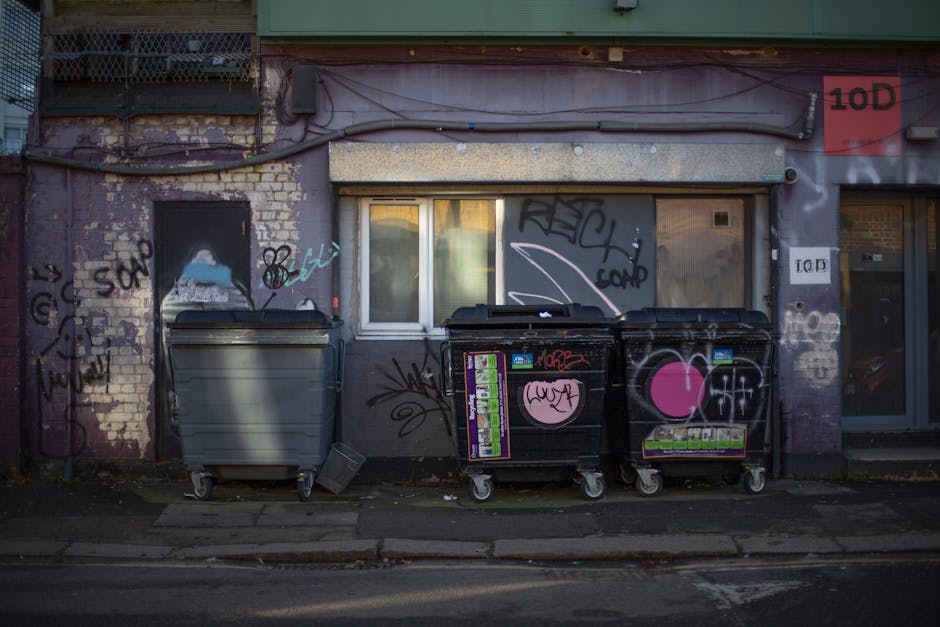
Commercial Waste in Archway
Commercial waste in Archway needs a practical service that can handle mixed business materials, keep collections organised and leave premises ready for the next working day. We provide commercial waste removal for offices, shops, hospitality venues, shared workspaces and other premises that need a dependable clearance arranged around everyday trading. The service is designed to remove recyclable and non-recyclable waste efficiently, with a clear focus on lawful handling, tidy working and sensible sorting.
Our work can include routine business waste removal, office clearances, bulky item collection and disposal of general unwanted items from commercial sites. Where materials need extra care, we can separate suitable items for recycling and direct special categories to the right disposal route. If you need to clear a single room, an entire floor or a storage area that has built up over time, the aim is to provide a straightforward service that fits the property and the load.
For a quotation, tell us what needs removing and when access is available. Contact us for commercial waste clearance in Archway and we will help you plan the next step.
Business waste collection arranged around your premises
Commercial waste removal works best when it is matched to the type of premises and the material stream. Offices often need paper, packaging, old furniture and redundant equipment collected together, while retail and hospitality sites may produce more cardboard, display items, stockroom waste and mixed general rubbish. We can remove these kinds of items without turning the process into a disruption, and the collection can be planned to suit building access, loading space and the practical limits of the site.
Some jobs are best approached as a single collection, while others are more sensible as part of a wider clearance. If waste has accumulated across several rooms, or if you are dealing with items stored in basements, back rooms or upper floors, it helps to sort the material into obvious groups before collection. Clear separation of reusable, recyclable and general waste can make the removal quicker and can also make the quotation more accurate. For larger or more varied loads, the most useful next step is often a brief description of the items and the spaces involved.
To keep things practical, it helps to know which items need to stay on site, which areas are accessible and whether the waste includes anything that needs special handling. A short list is often enough, but it is also useful to note awkward access, lift restrictions or items that may need to be dismantled. When that information is clear, the collection can be planned with fewer surprises and a better understanding of the work involved.
Office clearance and workplace items
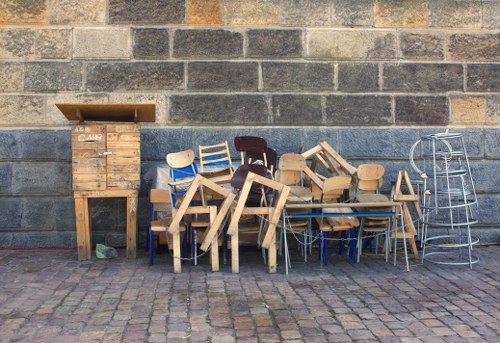
Office waste often includes desks, task chairs, filing units, small cabinets, monitors, printer stands and boxed paperwork that no longer needs to remain at the premises. We can remove individual office items or larger groups of furniture and equipment, helping you clear working areas, meeting rooms or back-office storage. Where appropriate, the service can be tailored to a partial office clearance rather than a full strip-out, which is often the more useful option for occupied premises.
Because office spaces usually contain a mix of materials, it makes sense to distinguish between reusable furniture, recyclable components and items that are simply ready for disposal. We do not assume every item is waste in the same way; some pieces may be suitable for separate handling, and others may need to be broken down before removal. This is especially relevant where workstations, shelving systems or large cabinets need to be taken out of tight or shared areas.
Useful office clearances are rarely about moving everything at once without thought. They usually depend on access routes, item size, floor finish and the amount of time available in the building. If you are preparing a quotation request, it is sensible to mention whether the furniture is assembled, stacked, fixed in place or spread over several rooms. That helps shape a more accurate plan for removal and disposal.
Mixed commercial rubbish and general site clearance
Not every commercial clearance is dominated by one material type. Many premises build up mixed rubbish over time: packaging, broken fittings, old displays, redundant stock, offcuts, damaged storage items and general unwanted materials that no longer serve the business. We can deal with mixed commercial rubbish as part of a broader site clearance, which is often the most efficient way to deal with accumulated clutter and reclaim usable floor space.
For some customers, the priority is a one-off clearance before a move, refurbishment or handover. For others, the task is to remove a backlog from a storeroom, corridor or unused area so that day-to-day operations become easier to manage. In either case, the removal needs to be balanced with the layout of the premises. Narrow access, shared entrances, controlled loading bays or sensitive surroundings can all influence the pace and method of the job.
- general mixed waste from business premises
- bulky items that no longer have a use on site
- packaging, offcuts and surplus stockroom material
- items that need sorting before disposal or recycling
Furniture disposal for commercial properties

Commercial furniture disposal is often needed when a premises is being reconfigured, refreshed or partially emptied. Chairs, tables, cabinets, reception units, shelving and other office or retail furniture can take up valuable space once they are no longer serving the business. We can remove these items as part of a planned clearance, helping you avoid leaving bulky pieces in corridors, loading areas or storage rooms for longer than necessary.
Furniture removal is usually easier when the items are identified in advance, especially if they are large, awkward or assembled in a way that affects access. Some pieces can be carried out intact, while others may need partial dismantling to move safely through doors, lifts or stairwells. If the furniture is mixed with general waste, it is often helpful to separate it into groups so the clearance can proceed in a logical order.
For business owners and property managers, the main decision is often whether to clear items immediately or wait until a larger project begins. Immediate disposal may suit a room that needs to be handed back or put back into service, whereas a broader clearance may be preferable when several areas are changing at once. Either way, the service can be tailored to the amount of furniture and the practical conditions on site.
Waste handling, sorting and disposal choices
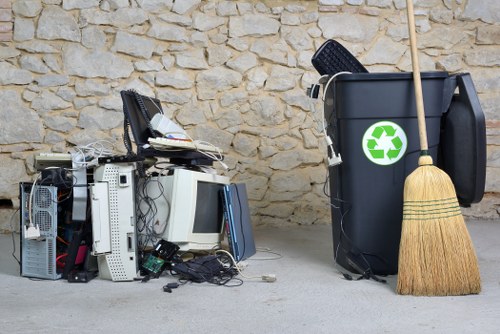
Commercial waste removal is not only about taking items away. It also involves deciding which materials can be separated, which can go for recycling and which require disposal through the correct route. That matters for businesses that want a tidy and responsible process, especially when premises contain a varied mix of office items, packaging, broken fittings or redundant equipment. We aim to keep the handling clear and appropriate to the material involved.
When a site contains several different waste types, a practical approach is to sort by category before collection begins. Recycling decisions are often simplest when made early, because cardboard, metals, office furniture and other recoverable items may be better handled separately from general rubbish. This does not mean every load has to be sorted into perfect detail before anyone arrives; it simply means that a sensible outline helps the collection run more smoothly and reduces the chance of confusion.
If you are arranging a quotation, it is enough to describe the main waste types in ordinary terms. A business site with old furniture, packaging, paperwork and broken fittings does not need a technical inventory to begin with. What matters is a clear picture of the work, so the removal can be matched to the material, the access and the intended timescale.
About Archway
Archway is a district in north London, centred on one of the northern approaches to the city and closely associated with the road that gives the area its name. The locality sits within the London Borough of Islington and lies between Highgate, Crouch End, Upper Holloway and Kentish Town, with the northern edge of inner London giving it a character shaped by both residential streets and busy transport corridors. Archway tube station, on the Northern line, is a focal point for movement through the area and has long helped define the district’s identity as a meeting point between local neighbourhood life and wider city connections. The place name itself comes from the former Highgate Archway, the engineering feature that once carried the road across the valley and became a well-known landmark in the nineteenth century. Around the district, Victorian and later housing sit alongside shops, pubs, small commercial frontages and community buildings, while the steep slopes towards Highgate and the nearby terraces give the area a varied street pattern. Waterlow Park is one of the notable green spaces associated with the wider locality, and Highgate Cemetery, though technically beyond the core of Archway, is part of the cluster of landmarks that shape how the district is understood. The area’s blend of transport history, urban housing and local commerce makes it a recognisable part of north London with a strong sense of place.
Services for different commercial settings
Different premises generate different kinds of waste, so the service needs to stay flexible rather than forcing every job into the same pattern. An office may mainly need furniture and paper clearance, while a shop might need packaging, shelving and stockroom rubbish removed. Hospitality sites can have a different mix again, with damaged items, storage clutter and general waste building up in back-of-house areas. We can adapt the removal to the setting instead of treating every property as identical.
H3: Retail and customer-facing premises Shops and showrooms often need careful removal because items may be close to display areas, tills or public entrances. That can mean arranging collections outside customer hours, managing loading space properly and keeping the route out of the building as clean as possible. The goal is to move the items without disrupting trading more than necessary, while still dealing with bulky or awkward materials in a controlled way.
H3: Offices, studios and shared workspaces Workplaces with desks, storage units and shared equipment often need a measured approach to removal. Items may be spread across several rooms, and some may need to be protected from damage until they are taken away. In these situations, it helps to know which areas are in use, which are being cleared and which items are staying behind. That simple distinction can prevent unnecessary movement and keeps the work focused.
Clearance planning and quotation details

Quotation requests are easier to handle when they give a clear picture of the commercial waste involved. The most useful details are usually the type of premises, the kinds of items to be removed, the approximate amount and anything that might affect access. If items are stored in a basement, upper floor, locked room or shared loading area, mention that early. It is also useful to say whether the waste is loose, bagged, boxed or already grouped together.
Another helpful point is whether the clearance is isolated or part of a wider programme of work. A single office room, for example, may be straightforward, while a phased clear-out across several areas can require more careful planning. If there are items that need dismantling, lifting assistance or separation from retained stock or equipment, that should be noted as well. The clearer the outline, the easier it is to shape the removal around the actual job.
For the next step, send a brief description of the waste and the property type, and ask for a quotation. You can also review our pricing and quotes information if you want to understand how we approach the work, then request a quotation when you are ready.
Recycling, responsible disposal and business follow-through
After collection, commercial waste should be handled in a way that matches the material and the disposal route. That includes considering what can be reused or recycled and what must go through a different process. Businesses often appreciate a service that keeps those decisions practical, because it avoids unnecessary handling while still treating the waste with care. The aim is not to overcomplicate the job, but to make sure the outcome is orderly and responsible.
Where a clearance produces several material types, the route taken may depend on the composition of the load rather than on a single label. Furniture, packaging, office clutter and general rubbish can each have their own handling needs, and those differences matter when you are trying to keep a commercial site clean and workable. If you want to learn more about that approach, our recycling and sustainability page explains the broader principles behind material handling and disposal choices.
When the work is complete, the site should be left in a condition that allows the business to continue, reset or hand over the area without dealing with avoidable leftovers. If your premises also needs collection of other unwanted items, our waste removal service page gives a broader overview of the kinds of general removals that can be arranged alongside commercial clearance. Book a commercial waste removal quotation in Archway when you are ready to move ahead.