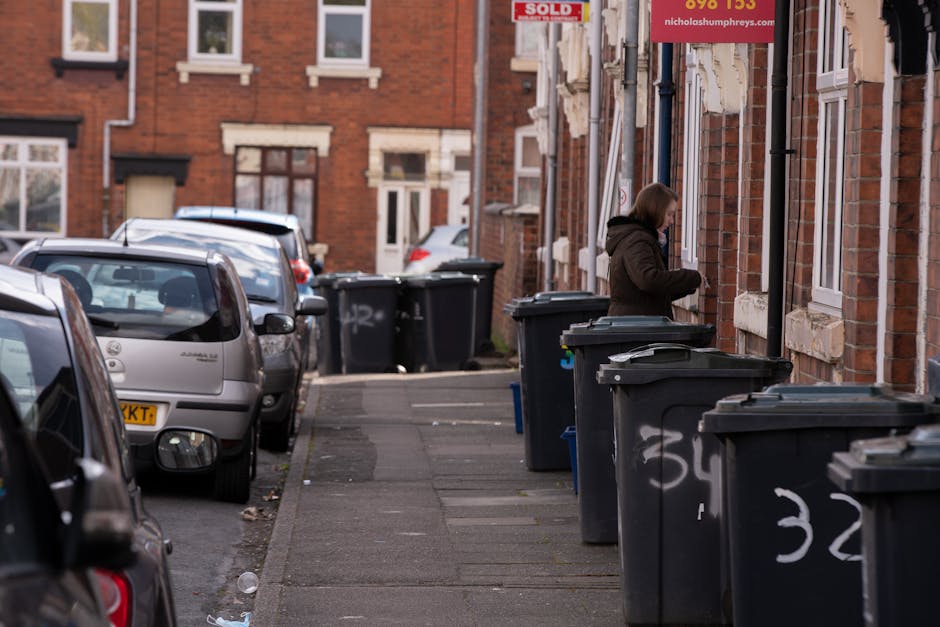
Tufnell Park bulky rubbish collection times and prices: a practical guide for local residents and businesses
If you're trying to sort out Tufnell Park bulky rubbish collection times and prices, you're probably balancing three things at once: how soon the waste can be removed, what it will cost, and whether the service will actually fit your building, your schedule, and your nerves. Fair enough. Bulky waste has a habit of appearing at the worst possible moment - after a flat clear-out, at the end of a renovation, or when a sofa has finally given up the ghost with a very loud sigh.
This guide explains how bulky rubbish collection normally works in Tufnell Park, what influences the price, what time slots are realistic, and how to avoid the common mistakes that make a simple job more expensive than it needs to be. You'll also find a clear step-by-step process, a comparison table, and a practical checklist so you can make a sensible decision without wading through fluff.
- Why times and prices matter
- How bulky rubbish collection works
- Key benefits and practical advantages
- Who this service is for
- Step-by-step guidance
- Expert tips for better results
- Common mistakes to avoid
- Tools, resources and recommendations
- Law, compliance and best practice
- Options and comparison table
- Real-world example
- Practical checklist
- Conclusion
- Frequently asked questions
Why Tufnell Park bulky rubbish collection times and prices Matters
In Tufnell Park, timing and cost are closely tied to how easy it is to access the property, how much waste you have, and how quickly you need it gone. That sounds obvious, but in practice it changes everything. A ground-floor load-out with easy parking is a very different job from a third-floor flat on a narrow street with a long carry distance and no lift. Same sofa. Very different outcome.
Knowing the likely collection window helps you plan around building access, neighbours, work calls, and the lovely little logistical dance that comes with London parking restrictions. Knowing the price structure helps you avoid surprises on the day. Most people do not want a mystery invoice after the rubbish has already left the building. And honestly, who would?
There's also a practical value to getting the timing right. If a bulky item is blocking a hallway, attracting damp, or stopping a room from being used, even a one-day delay can be a nuisance. For businesses, delay can mean a cluttered office, a cramped storage area, or a job that simply cannot progress until the waste is cleared.
Key takeaway: the best bulky rubbish collections are not just cheap or fast; they are planned well enough to fit the property, the access, and the amount of waste without drama.
How Tufnell Park bulky rubbish collection times and prices Works
Bulky rubbish collection is usually arranged as a same-day, next-day, or scheduled pickup service, depending on availability and the complexity of the load. In most cases, the process starts with a description of what needs removing, followed by an estimated price based on the volume, weight, item type, and access conditions.
For straightforward domestic jobs, you may be given a time window rather than an exact minute-by-minute arrival. That is normal. London traffic, parking, and the realities of route planning make precise arrivals difficult. A collection window gives the crew space to work safely and still get to the next job on time. To be fair, exact time promises are often where expectations go sideways.
Pricing is usually built from a few core factors:
- Volume: how much space the waste takes up in the vehicle.
- Weight: heavy materials can raise the cost, especially if they require special handling.
- Item type: furniture, appliances, builders' waste, and mixed rubbish can all be priced differently.
- Access: stairs, long carry distances, basement flats, parking limits, and restricted entry can affect labour time.
- Urgency: same-day or short-notice collections can sometimes cost more than standard bookings.
Some jobs are simple enough to quote from photos, while others need a quick call or site visit. If your load includes awkward items like a broken wardrobe, an old mattress, or a fridge, it helps to mention that early. These details can change both the time needed and the final price.
If you need a clearer estimate before booking, the pricing and quotes page is a sensible place to start, and for larger jobs you may also want to review the main waste removal service to understand how broader collections are handled.
Key Benefits and Practical Advantages
The main benefit is obvious: the waste disappears and your space becomes usable again. But the real advantage is the combination of convenience, certainty, and speed. A decent bulky rubbish collection removes the burden from you, both physically and mentally. Anyone who has tried to wedge a mattress down a narrow staircase knows that "I'll do it myself later" can turn into a whole weekend lost. Or worse.
Here are the benefits people tend to appreciate most:
- Fast turnaround: useful when you're moving, refurbishing, or trying to clear a room quickly.
- Less heavy lifting: ideal for oversized furniture and awkward items.
- Better space planning: easier to clear bedrooms, lofts, garages, or offices without waiting for council schedules.
- Cleaner finish: avoids the mess that often comes with moving items through communal areas.
- Useful for mixed loads: when bulky items are mixed with smaller rubbish or non-hazardous debris.
There's another practical upside: it often costs less overall than people expect once you factor in vehicle hire, your own time, fuel, parking stress, and the risk of doing a bad back in. Not exactly glamorous maths, but real maths.
For bulky furniture specifically, services like furniture disposal and furniture clearance can be more efficient than trying to break everything down yourself. If you're clearing a whole room, flat clearance or home clearance may make more sense than booking several smaller removals.
Who This Is For and When It Makes Sense
This type of collection suits more people than you might think. It's not only for big renovation projects. In Tufnell Park, bulky rubbish collection is often used by renters, landlords, homeowners, letting agents, local shops, offices, and anyone dealing with items that are too large for a normal bin collection.
Typical situations include:
- an old sofa, armchair, wardrobe, or bed frame needs clearing
- a fridge, washer, or appliance has stopped working and is taking up space
- a loft, garage, or spare room has become a storage cave
- a tenancy is ending and the property must be cleared quickly
- an office needs bulky desks, chairs, or filing units removed
- a small building or decorating project has created leftover materials
For landlords and agents, speed is often the biggest issue. A property cannot be re-let properly if there's a broken bed, a stained mattress, and two mystery boxes sitting in the corner. For businesses, presentation matters too. Clutter can make a workspace feel smaller and more chaotic than it really is.
If your job is linked to a move, refurbishment, or larger tidy-up, you may find that a broader service such as house clearance, office clearance, or loft clearance is the better fit. For renovation debris, builders waste clearance may be more appropriate.
Step-by-Step Guidance
Here's the simplest way to organise a bulky rubbish collection without overthinking it.
- List the items clearly. Write down what needs removing. Include sizes if possible and mention any heavy or awkward pieces.
- Check access. Note stairs, lifts, parking restrictions, narrow hallways, or controlled entry points. These details affect both time and price.
- Take photos. A few good pictures can speed up the quote and reduce back-and-forth. Natural light helps. So does not photographing one chair from across the room and calling it a day.
- Ask about the time window. Find out whether the job will be same-day, next-day, or booked for a specific slot. If you need access to be coordinated with a concierge or building manager, say so early.
- Clarify the price basis. Ask what the quote includes: labour, loading, disposal, congestion implications, or any extra charges for certain items.
- Separate restricted items. Hazardous materials, confidential papers, and certain electrical items may need specialist handling. Do not leave these mixed in unless you've checked first.
- Prepare the collection area. Move smaller items out of the way and make sure the path is clear. That saves time and lowers the risk of damage.
- Confirm payment and completion details. Good operators explain how payment works and when the job is complete. If you want that reassurance, review payment and security before you book.
If the waste is mostly a single type of item, you may also find it useful to look at focused services such as mattress and sofa disposal or fridge and appliance removal. It can make the quote cleaner and the schedule easier to plan.
Expert Tips for Better Results
Over the years, the jobs that go smoothly tend to have one thing in common: someone took ten minutes to think ahead. That's it. Ten minutes. It's not glamorous, but it saves stress later.
Useful tips for Tufnell Park collections:
- Be honest about volume. Underestimating waste usually leads to a revised quote on arrival.
- Group items by room. This helps the crew work faster and helps you remember nothing important was left behind.
- Keep access instructions simple. "Ring flat 2, then call me" is better than a long chain of confused messages.
- Ask about recycling. Many items can be sorted for recovery rather than sent straight to disposal. The cleaner the separation, the better.
- Choose the right service type. A small bulky collection may be ideal for one or two items, but a property-wide clearance is often more efficient for bigger jobs.
If you are dealing with mixed waste, have a look at the company's recycling and sustainability information. It helps set expectations about what may be reused, recycled, or separated for proper disposal.
And one slightly unglamorous tip: if you live in a shared building, let neighbours know the lift or hallway may be used for a short time. A simple heads-up avoids crossed wires and the odd grumble from next door. We've all been there.
Common Mistakes to Avoid
A lot of pricing issues come down to avoidable misunderstandings, not hidden tricks. The good news? These are easy to sidestep once you know them.
- Booking without full item details. "A few bits" can mean almost anything. Be specific.
- Ignoring access costs. A difficult walk from the vehicle to the property can affect labour time.
- Mixing waste types. Bulky furniture, builders' debris, and electrical items may need different handling.
- Assuming a fixed time. Collection windows are usually more realistic than exact arrival promises.
- Leaving everything until the last minute. That often narrows your options and can increase cost.
- Forgetting about restricted items. Hazardous waste should not be treated like ordinary rubbish.
One of the most common frustrations is price drift. People ask for a quote based on one armchair and a side table, then remember three bags, a broken bookcase, and a fridge in the utility room. At that point the quote has to change, because the job has changed. Fair enough, really.
If you're unsure whether an item belongs in a normal bulk collection, the service pages for hazardous waste disposal and what can go in a skip can help you think through the boundaries, even if you are not booking a skip itself.
Tools, Resources and Recommendations
You don't need specialist software to book a bulky rubbish collection, but a few simple tools make the process smoother.
- Phone camera: take clear photos of all items together and from a couple of angles.
- Notes app or checklist: keep a count of items, rooms, and any access issues.
- Measuring tape: useful for oversized items or narrow stairwells.
- Calendar reminder: important if you need to coordinate around deliveries, building access, or work schedules.
From a service-planning point of view, a few pages are particularly useful before you book. The book online option is handy if you already know what you need, while contact us is the better route when the collection is awkward, time-sensitive, or includes unusual items. For background on the business itself, it's sensible to read about us and the insurance and safety information, especially if the job involves moving items through shared or tight spaces.
If you want to understand the company's working standards and operational approach in more detail, the health and safety policy and complaints procedure are worth a look. That might sound dry, but it's actually a good sign when a provider is clear about process. Clarity is underrated.
Law, Compliance, Standards, or Best Practice
Bulky rubbish collection in London should always be handled with proper care, especially when items are heavy, awkward, or potentially contaminated. You do not need to become an expert in waste law to book a service, but it helps to know the broad expectations.
In practice, the main best-practice points are straightforward:
- Waste should be transported and handled safely. Crews should use sensible lifting methods and avoid unsafe shortcuts.
- Mixed waste needs sorting. Reusable or recyclable items should be separated where possible.
- Hazardous materials require special handling. Do not assume paint, chemicals, sharp waste, or some electrical items can go in with ordinary rubbish.
- Confidential material should be treated carefully. Paperwork from home offices or businesses should not just be tossed into mixed waste.
If your collection includes records, files, or paperwork from a business or home office, confidential shredding is the safer route. For office-specific clear-outs, business waste removal and office clearance are more relevant than a simple bulky item pickup.
It is also sensible to use a provider that explains its approach to recycling and disposal in plain English. You are not just paying for muscle. You are paying for lawful handling, proper disposal routes, and the confidence that the job will be done without cutting corners.
Options, Methods, or Comparison Table
If you are deciding between a bulky collection, a broader clearance, or a skip-style solution, the best option depends on the amount of waste, how quickly you need it removed, and how much lifting you want to do yourself. The table below gives a practical comparison.
| Option | Best for | Typical timing | Price factors | Good to know |
|---|---|---|---|---|
| Bulky rubbish collection | One or more large items, quick removal | Often same day or next day | Item type, volume, access, labour | Convenient when you want the items lifted from inside the property |
| Furniture disposal | Sofas, beds, wardrobes, tables | Usually fast if items are ready to move | Size, weight, number of items | Helpful for one-off household upgrades |
| House or flat clearance | Multiple rooms or whole-property clear-outs | Often scheduled to suit access and scale | Volume, sorting time, access complexity | Often better value than booking item by item |
| Builders waste clearance | Renovation debris and mixed site waste | Depends on project timing | Weight, rubble content, loading effort | Best when home improvement has created mixed leftover waste |
| Skip-style option | Projects where you can load waste yourself | Usually scheduled delivery and collection | Skip size, hire length, permit needs | Can suit DIY jobs, but you do the loading |
If you are comparing methods, the most important question is not "which is cheapest?" but "which is cheapest for the way I actually live and work?" A busy household with stairs and no parking will often value labour-saving collection more than a DIY-loading option. Very different equation.
Case Study or Real-World Example
Picture a typical Tufnell Park flat: two flights of stairs, a narrow landing, and a sofa that has seen better decades. The resident needs the old sofa removed before a new one is delivered, and there's also a broken bedside unit and two bags of mixed clutter from the spare room.
The smart move is not to guess. The resident sends a few photos, mentions the stairs, and explains that parking is limited outside but available for a short loading window. The collection is arranged within a time slot that works around a work meeting, and the quote reflects the access conditions clearly. Nothing dramatic. No surprises. The old sofa is removed, the route is kept tidy, and the room is ready for delivery the next day.
That is the ideal outcome. Not flashy, just efficient.
Now compare that with a rushed booking made without photos. The crew arrives expecting one sofa and finds a sofa, a mattress, a wardrobe, and a fridge. The price has to change. The timing shifts. Someone is annoyed. Nobody enjoys being that person. A few minutes of preparation avoids most of it.
Practical Checklist
Use this before you book:
- List every bulky item you want removed
- Check whether any item is damaged, heavy, or unusually large
- Take clear photos from a few angles
- Note stairs, lifts, and parking limitations
- Confirm whether the job needs same-day or scheduled collection
- Ask what is included in the price
- Separate anything that may need special disposal
- Make sure hallways and entrances are clear
- Tell your building manager or neighbours if access may be briefly affected
- Keep the booking confirmation and payment details handy
If you tick those off, you're already ahead of most last-minute collections. Honestly, it makes a difference.
Get a free quote today and see how much you can save.
Conclusion
Getting clear on Tufnell Park bulky rubbish collection times and prices is really about reducing friction. Once you know what affects cost, how the time window works, and what details matter most, booking becomes much simpler. You can choose the right service, set the right expectations, and avoid the kind of awkward surprises that turn a tidy-up into a headache.
Whether you're clearing one heavy item or sorting out an entire room, the best result usually comes from giving accurate details, planning the access properly, and choosing a service that fits the job rather than forcing the job to fit a generic assumption. Small effort up front. Big relief later.
And when the last bulky item is gone and the space suddenly feels bigger, quieter, and easier to use, that's a good feeling - a proper one.
Frequently Asked Questions
What affects bulky rubbish collection times in Tufnell Park?
Timing usually depends on crew availability, access to the property, parking conditions, the number of items, and whether the job is simple or requires more labour. Same-day or next-day slots are often possible, but exact arrival times can be hard to guarantee in London.
How are bulky rubbish collection prices usually calculated?
Most prices are based on the space the waste takes up, the weight of the load, the type of items, and how hard they are to remove. Stairs, long carry distances, and awkward access can also affect the quote.
Can I get a price before the collection day?
Yes, in many cases you can. Clear photos and a list of items usually help provide a more accurate estimate before anyone arrives. If the load changes on the day, the final price may need adjusting.
Is same-day bulky rubbish collection available in Tufnell Park?
It can be, depending on scheduling and location. Same-day service is more likely when the job is straightforward and the provider has availability. It is worth asking early if you need a fast turnaround.
Do I need to move the items outside first?
Not usually. Many bulky rubbish services collect items from inside the property, which is one of the main reasons people use them. Still, clearing a path and making access easy helps reduce time and cost.
What kinds of bulky items are commonly removed?
Typical items include sofas, beds, mattresses, wardrobes, chairs, tables, fridges, washing machines, and other large household or office items. Some items may need specialist handling, so it is best to mention them in advance.
What if I have a mix of bulky items and smaller rubbish?
That is often fine, but it should be described clearly when you request a quote. Mixed loads can affect pricing, especially if the smaller rubbish changes the amount of space needed in the vehicle.
Are there items that should not go into a normal bulky collection?
Yes. Hazardous materials, some chemicals, and certain restricted items usually need special handling. If you are unsure, ask before booking rather than assuming everything can be taken together.
Is bulky rubbish collection better than hiring a skip?
It depends on the job. If you want the items removed from inside the property with minimal lifting on your side, bulky collection is often the better choice. If you are happy to load waste yourself over a period of time, a skip-style option may suit a different kind of project.
How do I make sure the quote is accurate?
Be specific about the number of items, their size, the rooms they are in, and any access issues. Photos are especially helpful. The more accurate your description, the more reliable the quote will be.
Can furniture be collected as part of a larger clearance?
Yes. In many cases, furniture removal is part of a broader clearance such as a flat, house, garage, or office clear-out. This can be more efficient than arranging separate collections for each item.
What should I do if I need to clear confidential or business waste too?
If the job includes paperwork, records, or office materials, it is better to treat those separately and ask about confidential shredding or business waste removal. That keeps the process cleaner and reduces the risk of mixing different waste types.
Where can I check more about the company's standards before booking?
It is sensible to review the company's information on about us, health and safety policy, and payment and security. Those pages help you understand how the service is run and what to expect.